12 min read
Generative search has drastically changed the way people search on the internet. Instead of scrolling through a list of links, users are increasingly turning to AI-powered tools to get direct, conversational answers. This shift is driven by advanced AI models powering new search experiences. To stay visible in this changing landscape, businesses and content creators must adapt their strategy through Generative Engine Optimization (GEO). Mastering GEO now will position you for success as generative AI transforms the future of search.
What is Generative Engine Optimization (GEO)?
Generative Engine Optimization (GEO) is the practice of optimizing your content so that it’s prominently featured in responses from AI-driven search engines and assistants. In simple terms, GEO ensures that when someone asks a generative AI platform (like ChatGPT, Google’s Bard, or Bing’s AI chat) a question related to your industry or expertise, the AI is more likely to include information from your content in its answer.
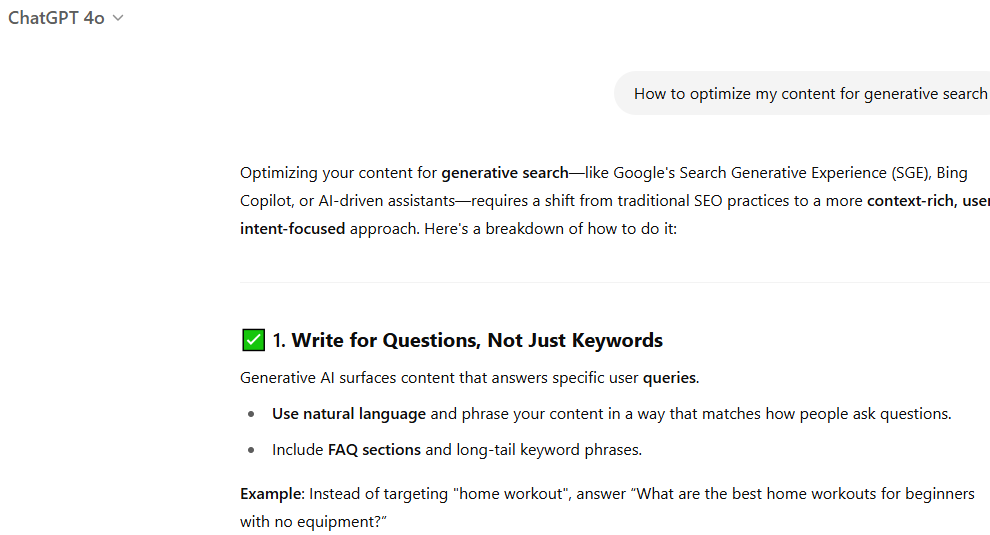
Generative search engines don’t work like traditional search engines that return a list of websites. Instead, they use AI models to generate an answer on the fly, pulling context and facts from the sources they’ve learned from or can access.
GEO means tailoring your website and content for this AI-driven approach. That involves creating content that not only serves human readers but is also easy for AI to interpret and trust. In essence, you’re helping the AI understand the value of your content so it can incorporate your brand’s insights when answering user questions.
GEO vs. Traditional SEO: Key Differences
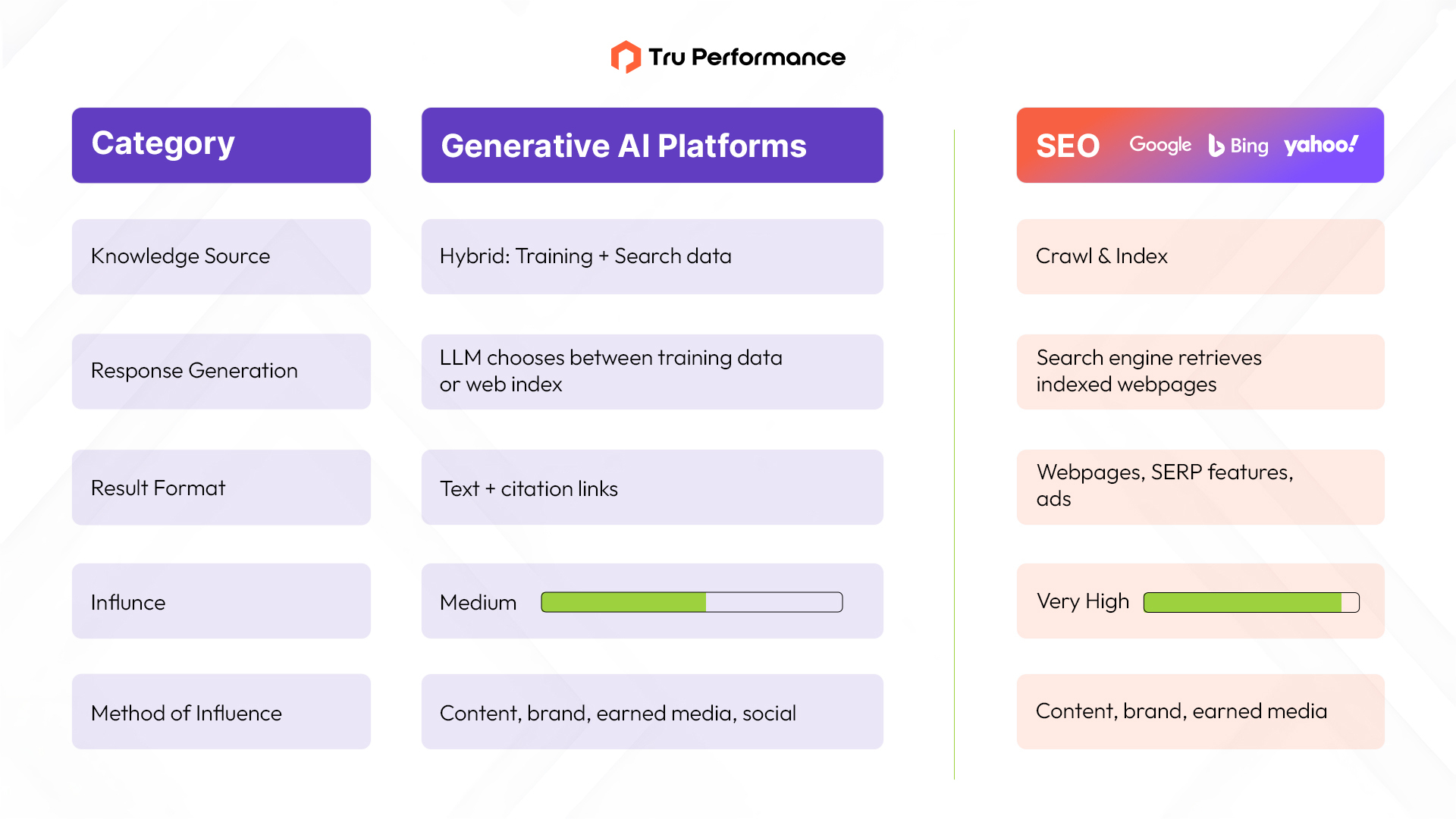
How does GEO differ from classic SEO?
Here are the key differences in focus and technique (even as GEO builds on core SEO principles):
- Focus: Traditional SEO aims to improve your ranking in search engine results pages (SERPs) for specific keywords. GEO aims to get your information included in the direct answer an AI provides to a user’s query. SEO is about being one of the top search results; GEO is about being part of the answer snippet that an AI delivers.
- Techniques: SEO relies on tactics like keyword optimization, meta tags, and backlink building to signal relevance and authority to search engines. GEO emphasizes content clarity, context, and credibility for AI algorithms. In practice, this means writing in natural, easy-to-understand language, structuring your content cleanly, and including authoritative details (for example, a statistic or expert quote) that an AI would recognize as high-quality evidence.
- User Interaction: With SEO, success often means a user clicks through to your website from the results page. With GEO, success might occur without a click, if an AI gives the user your information directly as an answer. You have less control over how your content is presented, since the AI might paraphrase or summarize it. That means your focus must be on providing information that’s accurate and clear on its own. In effect, SEO makes sure your site can be found, while GEO ensures your content is actually used by the AI in responding. They work hand-in-hand rather than one replacing the other.
Back Then
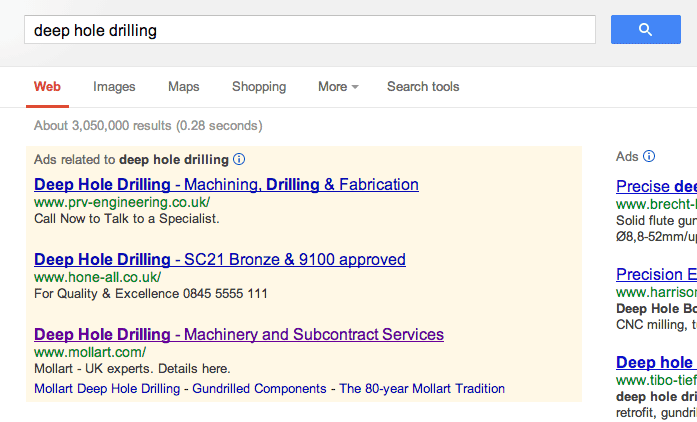
Results Now
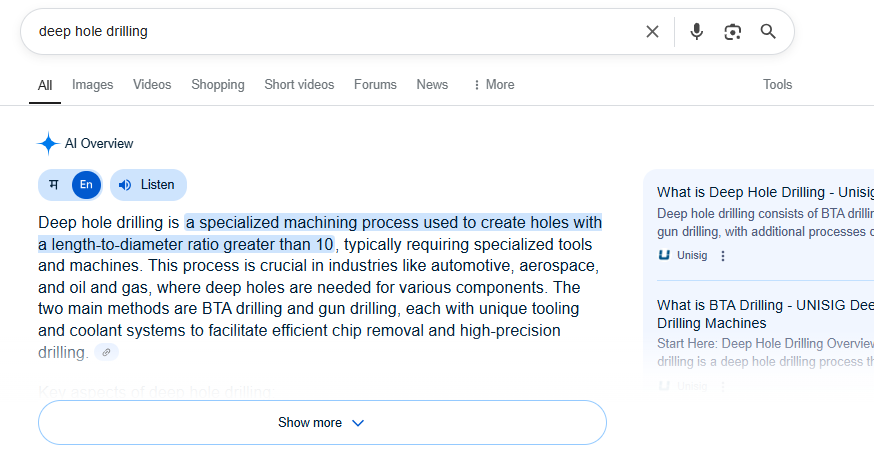
Importantly, as Forbes has noted, zero-click searches are on the rise, with over a quarter of desktop searches in the U.S. ending without any click at all—a number expected to grow as AI continues to dominate the SERP landscape.
Benefits of Embracing GEO
Why invest in GEO? Here are a few key benefits of incorporating generative engine optimization into your strategy:
- Stay Visible as Search Evolves: AI-driven tools like chatbots and voice assistants are becoming popular for finding information. As per research done by Gartner, a forecast mentioned that traditional search engine usage could drop by 25% by 2026 due to reliance on AI based search.
- Higher Content Relevance: GEO pushes you to create more focused, in-depth content. According to Forbes, content that answers natural language questions comprehensively is more likely to be featured in AI summaries. Generative engines prioritize complete, relevant, and clearly structured content.
- Authority and Trust Building: When AI platforms pull from your content to answer queries, it establishes authority. Being the foundation of an AI-generated response, even without a click, boosts brand trust and visibility.
- Competitive Edge: Companies that integrate GEO now will have an advantage. As traditional search strategies lose effectiveness, early adopters of GEO will control a larger share of AI-influenced discoveries.
- Adapt to Changing Behavior: ChatGPT queries average over 20 words, compared to the typical 3–5-word search on Google. This shows users are asking longer, more specific, conversational questions—and GEO is built to address exactly that behavior.
Key Strategies for Generative Engine Optimization
Implementing GEO effectively requires some new tactics alongside familiar SEO practices. Here are strategies to help you master GEO:
- Research Conversational Queries: Focus on long-tail, question-based keywords that resemble how users naturally speak to AI. Look for queries that reflect multi-part, nuanced questions, which are more common in generative search environments.
- Create Clear, Comprehensive Content (with Credibility): Make your content easy for AI to parse and authoritative enough to be chosen as a source. Use bullet points, subheadings, expert quotes, and updated statistics. For example, generative answers on Google increased 3x between late 2024 and early 2025, now appearing on over 15% of queries according to Forbes.
- Use Structured Data and Solid Technical SEO: Schema markup, especially for FAQs and How-Tos, enhances AI comprehension. Fast-loading pages and mobile-friendliness continue to support both traditional and generative optimization.
- Monitor and Adapt: Regularly assess where your content appears in AI-generated responses. If competitors dominate, evaluate what structure or information they’re offering and adapt your own strategy.
- Focus on Informational and Unbranded Queries: These are most impacted by AI responses, with some websites seeing a 25-30% decline in CTR when AI overviews are shown (Forbes). GEO helps recover visibility in this changing landscape.
What can you do to start optimizing for GEO
The field of Generative search is new and rapidly evolving, which raises one concern amongst many SEOs on what can be done to support their client website for the cause. You will be able to find multiple articles online which might give you a hint but not the right actionable that you can implement to get going with the initial steps. Below mentioned are a few crucial ways by which you can start optimizing too:
Allow AI Bots to Crawl your website by adding Directives to your Robots.txt file
By explicitly naming your “agentic-AI” crawlers (e.g. Claude-User, ChatGPT-User, Perplexity-User) and then giving them their own “Disallow:” group with no paths blocked, you get a number of advantages:
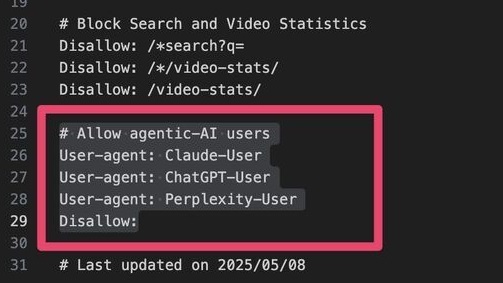
Guaranteed access to all your “good” content
Without that dedicated allow-all group, those AI bots would fall back on the top-level User-agent: * rules and inherit your parameter-blocking and section Disallows. By opening a separate group, you ensure they see everything you want them to index (no accidental misses).
Fine-grained control over different crawler types
You can treat traditional search engines and specialized AI agents differently. For example, you might let Googlebot crawl certain paginated archives that you’d prefer AI agents skip, or vice versa.
Reduced server load and crawl-budget savings
By blocking query strings, embeds, PDFs, stats pages, etc., for your general crawler pool, you avoid wasting bandwidth on low-value URLs. At the same time, you can still let your trusted AI agents freely harvest the core content they’re optimized to summarize.
Cleaner, more predictable data for AI ingestion
AI-driven services often fetch and preprocess content directly from the HTML. Keeping them on canonical, parameter-free URLs means fewer edge-cases (duplicate content, missing context, infinite filters) and more reliable summaries or embeddings.
Better security and compliance posture
You can cordon off legally sensitive sections (reprint permissions, private embeds) from most crawlers, yet still permit only your vetted AI partners to access them if that’s part of your licensing.
Futureproofing for new AI user-agents
As more “ChatGPT-style” or “Claude-style” services spring up, you can simply add their UA strings to your robots.txt allow-list, rather than overhaul your global rules.
Sharpen Your Structured Data
Add Core Schema.org Markups
- On your homepage, use the Organization schema (name, logo, address, contact, social links).
- For each product or service page, tag up with Product, Service, or Offer schema fields (specs, pricing, availability).
- If you have blog posts or technical articles, include Article or BlogPosting markup.
Build Q&A Sections
- Identify five or six top questions your prospects ask—e.g., “What’s the lead time for custom CNC parts?”
- Create a simple FAQ block on your pages or a standalone FAQ page; wrap it in FAQPage schema. AI tools love pre-formatted Q&A because they can lift your answer verbatim into their responses.
Link to Authoritative Profiles
- In your organization markup, use the SameAs property to point to your LinkedIn, industry directory, or Wikipedia (if you have one).
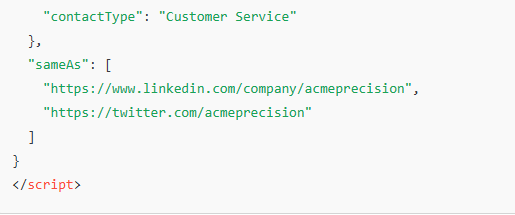
- This reinforces your brand’s identity in knowledge graphs and AI knowledge bases.
Structure Content for Quick AI-Grabs
Use Clear, Semantic Headings
- Break each page into bite-sized sections with <h2>, <h3>, etc., that describe exactly what follows (“How Our CNC Machining Works,” “Key Specifications,” “Maintenance Tips”).
- A clean heading hierarchy makes it easy for AI to isolate the snippet it needs.
Front-Load Summaries
- At the top of longer pages, add a 2–3 sentence “TL; DR” summary of the page’s main points.
- AI models frequently pull from the introduction to generate concise responses.
Write in a Conversational Q&A Tone
- Speak Directly to Your Audience: Frame content as if you’re talking with a client or colleague. Use “you” and “we,” keep sentences short, and mirror the way people ask questions.
- Embed Inline Q&A Blocks: Rather than burying answers in long paragraphs, pull them out into clear Q&A snippets that chatbots can easily lift.
Optimize Visual & Multimedia Elements
Descriptive Image Filenames & Alt Text
- Rename files to something that directly explains the meaning of the image without the use of additional phrases.
- In the alt attribute, write a natural description that defines the meaning of the image and enhances it to be found on google image search queries.
Provide Transcripts for Videos
- If you host product demos or facility tours, embed a text transcript or captions below the video.
- Search engines and AI can’t “watch” videos, but they can parse transcripts line by line.
Embed Helpful Diagrams
- A simple workflow chart or exploded-view drawing gives AI more context to pull into its answers.
- Always include matching alt text and a brief caption to explain the graphic.
Reinforce Credibility & Expertise
Be Detailed on Your About & Team Pages
- Flesh out you’re About page with your company’s history, core competencies, and mission in clear, keyword-rich prose.
- Add a “Leadership” or “Engineers” page with short bios (qualifications, years of experience), and link each name to their LinkedIn or professional profiles.
Showcase Client Logos & Testimonials
- A rotating logo carousel or a few highlighted quotes from satisfied industrial clients signals real-world proof.
- Sprinkle these trust badges across service pages.
Use Author Byline & Person Markup
- On every blog post or case study, add an author byline that links to an author bio page.
- Wrap those pages in Person schema, so AI knows who wrote the content and sees their credentials.
Improve Technical & UX Signals
Ensure Full HTTPS & Contact Info
- No mixed-content warnings—every resource loads over SSL.
- Display phone, email, and address prominently (footer and header).
Boost Site Speed & Mobile Friendliness
- Compress images, enable browser caching, and run Google’s Page Speed Insights.
- A fast, responsive site is more likely to crawl thoroughly and favored in generative overviews.
Enhance Accessibility
- Use meaningful link text (avoid “click here”), proper ARIA labels, and good color contrast.
- Clear, accessible code helps AI agents traverse your pages without getting tripped up.
Build Off-Page Authority
Earn High-Quality Backlinks
- Pitch guest articles to niche manufacturing journals or trade publications.
- Get your business listed in respected industry directories or association sites.
Maintain Consistent External Profiles
- Keep your LinkedIn, Crunchbase, and (if eligible) Wikipedia page up to date, with the same company description, founding year, and key products.
- Link those profiles back to your official site.
Create Shareable Resources
- Compile a short industry report, original dataset, or how-to guide—something that others will naturally reference.
- Even a five-page PDF with your own production benchmarks can attract citations, and every citation reinforces your site’s authority in AI’s eyes.
Challenges in GEO
GEO brings new challenges that marketers need to navigate:
- Measuring Impact: Because AI often delivers answers without a click, traditional KPIs like page views are less informative. Gartner projects that by 2026, nearly half of all website traffic previously dependent on SEO may be reduced due to AI-first behaviors
- Control and Attribution: Generative engines may not credit your site directly. While frustrating, your content still plays a role in shaping the narrative users receive
- Content Demands: GEO requires high-quality content creation across text, image, and even audio formats. It also pushes marketers to balance clarity with creativity, ensuring AI can parse the content while maintaining brand tone.
The Future of Search with GEO
Generative AI is quickly becoming a staple of how people search. As this technology matures, GEO will likely become an essential part of SEO, not a standalone effort. Search engines are already blending AI-generated answers into their results, and this trend will only accelerate.
Forbes recently reported that over 88% of AI search snapshots appear for broad, informational queries, which historically drove high traffic to content publishers. Without GEO, that visibility risks disappearing.
In short, optimizing for generative engines is becoming the new normal in search strategy. Brands that adapt to GEO now will maintain and grow their visibility as the landscape shifts. By embracing GEO, you’re positioning your brand at the forefront of the future of search — ensuring that no matter how many questions are asked, your answers can be found.