



Mastering A/B Testing in Email Marketing: Strategies, Best Practices, and Winning Ideas
28 Jan, 2025
Our advisory services empower enterprises with data-backed insights and strategic consultation. We identify operational gaps, craft actionable strategies, and align business goals with growth opportunities, helping organizations improve processes, drive innovation, and achieve sustainable performance across every function through expert guidance.
We enable enterprises to thrive digitally through data-driven strategies, marketing intelligence, and integrated technology. From managed tech solutions and creative design to lifecycle automation and analytics, our digital operations deliver performance optimization, customer engagement, and transformative growth across every digital channel.
We help streamline complex operations to deliver scalability and efficiency. Through various business operation services, we simplify workflows, enhance productivity, and ensure friction-free onboarding that drives operational excellence, measurable growth, and long-term business success for enterprises.
We build intelligent systems that combine AI agents, applications, and smart automations to transform enterprise workflows. Our solutions enhance decision-making, reduce manual effort, and optimize cost and performance, which empowers organizations with scalable, data-driven innovation for future-ready growth.
Learn about our journey, core values, and vision for business transformation. We combine innovation, expertise, and collaboration to empower enterprises with scalable solutions that enhance performance, accelerate growth, and create long-term value across industries.

Join a culture of innovation and excellence that believes in inclusivity and diversity. Explore exciting career opportunities, collaborate with forward-thinking teams, and help redefine business performance through strategy, technology, and digital transformation.
Stay updated with the latest news, media coverage, and announcements. Read stories about our achievements, partnerships, and innovations that shape the future of business transformation and digital excellence.
Discover insights, thought leadership, and trends shaping the future of business operations, AI, marketing, and technology. Our blogs offer expert perspectives and actionable ideas to help organizations adapt and excel in a fast-paced world.

Stay informed with curated updates, success stories, and expert insights, delivered straight to you. Our newsletters keep you ahead of emerging trends, digital innovations, and strategies driving enterprise performance and growth.
Learn about real-world client success stories that showcase performance achieved through our solutions. Explore how we’ve helped clients across industries enhance efficiency, boost growth, and achieve digital transformation goals.
Access valuable resources, guides, and tools designed to accelerate your business growth. Download resources, checklists, and frameworks that provide actionable insights and proven methods to enhance enterprise performance.
28 Jan, 2025
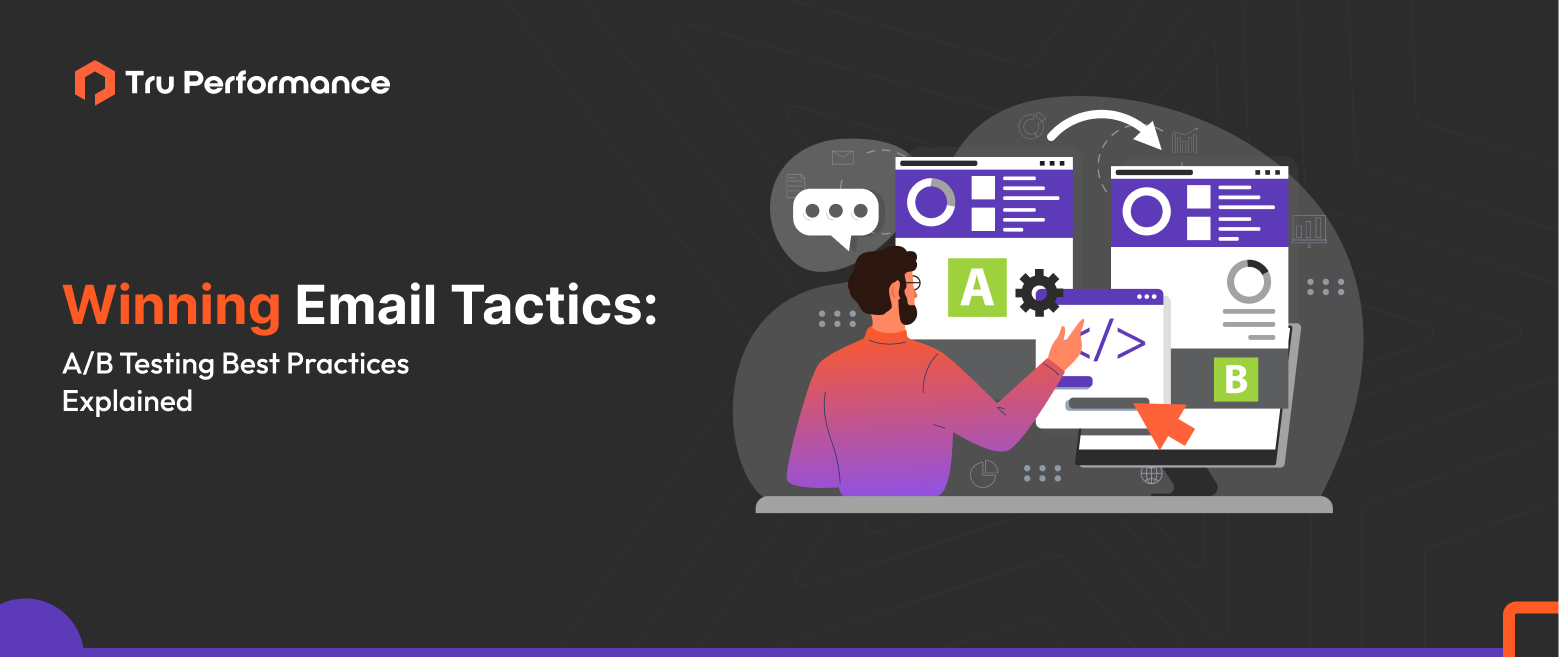
A/B testing has emerged as a crucial practice in email marketing. By systematically evaluating different components of your campaigns, you can discover what resonates most with your audience and make informed adjustments to enhance performance. This guide offers actionable strategies for A/B testing email campaigns, alongside proven best practices and illustrative examples, to help transform your email marketing into a data-driven success.
A/B testing, or split testing, is a technique where two versions of an email are sent to different audience segments to determine which performs better. For instance, testing two subject lines might reveal which one leads to more opens. This straightforward method removes the guesswork from email marketing by delivering data-backed results.
Marketers often wonder, “Is A/B testing worth the effort?” Absolutely. Testing enables the refinement of elements like subject lines, calls-to-action (CTAs), and design. Even simple tests can yield significant improvements, empowering businesses of all sizes to make smarter decisions.
A/B testing is vital for optimizing engagement and driving revenue. It enables you to:
Example: One e-commerce brand replaced static images with animated GIFs in its emails, leading to a 25% boost in click-through rates and a 40% surge in sales. Small adjustments can result in remarkable gains.
Here’s a step-by-step approach to effective A/B testing:
Pro Tip: Allow at least 7-14 days for sufficient data collection or until it reaches statistical significance.
Subject lines significantly influence open rates. Experiment with personalization, urgency, and tone. For example:
Test A: “Exclusive Deals This Week”
Test B: “[Name], Don’t Miss Out on These Savings!”
Result: The personalized subject line achieved a 20% higher open rate. Simple tweaks can have a big impact. Other ideas include testing emojis, time-sensitive phrases, or curiosity-driven wording to see what resonates with your audience.
When you’re ready to go beyond the basics, try these advanced techniques:
These strategies deepen audience insights and enable larger-scale optimization for email marketing.
“A recent A/B testing project involved a leading low-code process automation platform. We tested two different welcome email sequences for new customers: one with a single introductory email and another with a three-part series. By analyzing open rates, click-through rates, and conversion rates, we determined that the three-part email sequence resulted in a 20% higher customer engagement and a 15% increase in successful onboarding.”
To get the most out of A/B testing:
By following these guidelines, you can create a robust testing framework to improve performance consistently.
After testing, it’s critical to analyze results thoroughly. Use tools like Google Analytics or Tableau to assess:
Sharing insights across your team ensures that improvements are systematic, benefiting your overall marketing strategy.
A/B testing isn’t just a method—it’s a mindset. By leveraging data and aligning with audience behavior, you can create impactful email campaigns that deliver higher engagement and greater ROI. Use the strategies in this guide to unlock the full potential of your email marketing efforts.
The Enterprise Martech Problem: Data Without Insights Most enterprises face a critical challenge today. They collect massive customer data across CRM platforms, analytics tools, ad networks, and email systems. Yet this data remains siloed and disconnected from actual decision making. Marketing teams still rely on backward looking reports instead of forward looking intelligence. Customers demand […]
Introduction Outsourcing is usually seen as a critical choice for businesses aiming to secure specialized talent as a cost-effective solution. Traditionally, global hubs in the southern hemisphere, such as India, Brazil, and the Philippines, established themselves by offering a comprehensive range of business operations at reduced costs. However, a real change is now sweeping across […]
Search is changing fast. People no longer scroll through ten blue links. They ask questions and expect direct answers. Tools like Google AI Overviews, ChatGPT, voice assistants, and other AI answer engines now decide what information gets shown first. This shift has created a new discipline called Answer Engine Optimization (AEO). Instead of only ranking […]
Introduction Small website issues rarely announce themselves loudly. They do not trigger alerts, crash servers, or stop traffic overnight. Instead, they quietly introduce friction into the buyer journey. Over time, these small breakdowns compound, reducing conversion rates, extending sales cycles, and weakening pipeline velocity. Most B2B teams focus on driving more traffic when pipeline slows. […]