


Audit
App store
audit
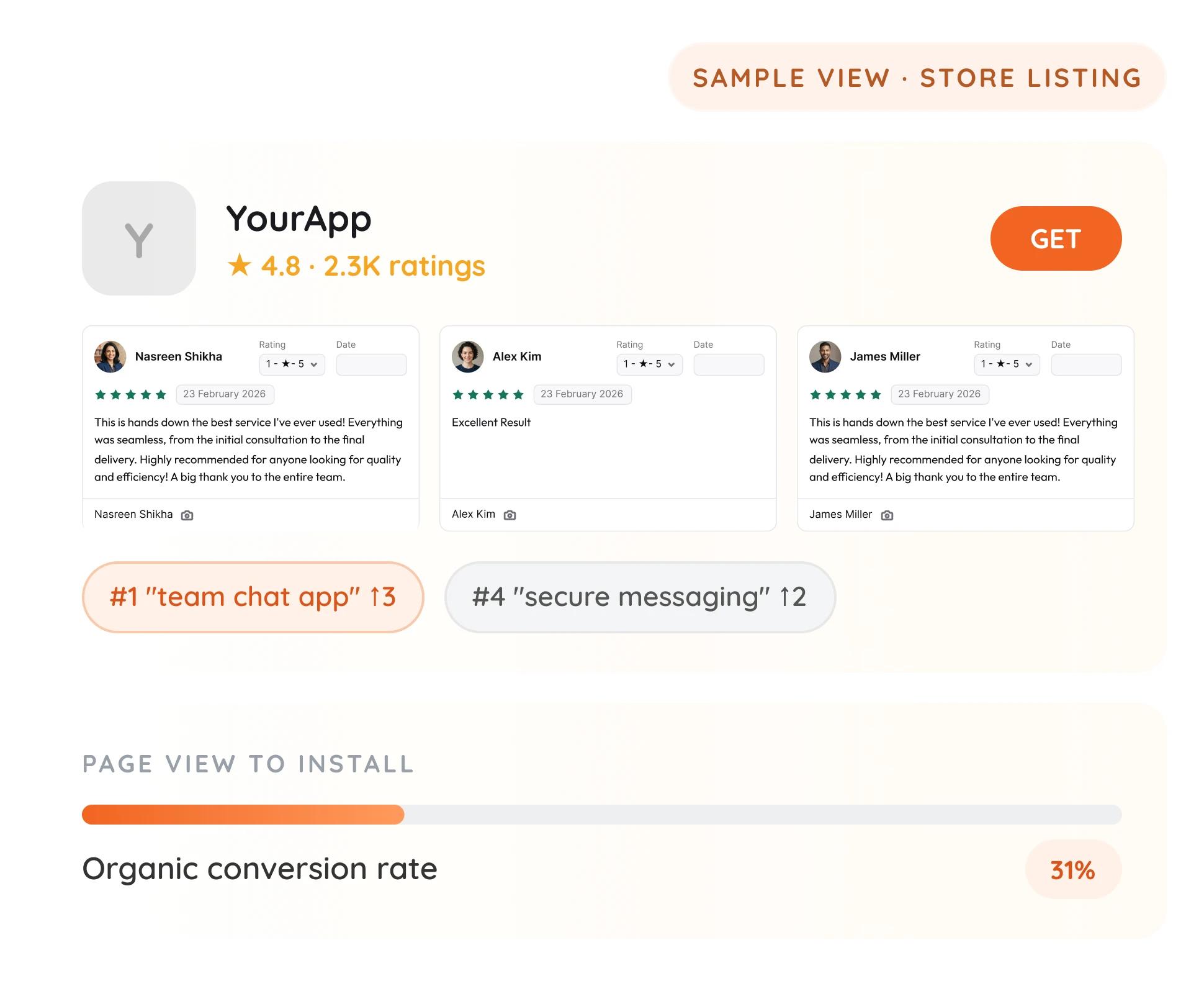
We baseline keyword rankings, conversion rate, creatives, and ratings on both stores, then rank the gaps by install impact.


Is your company’s revenue growth feeling chaotic? Are your sales, marketing, and customer success…
Read the blog
You might be happy with your current PPC campaign performance but it can be…
Read the blog
Imagine this: you land on a website and wait…and wait…for the page to load.…
Read the blog
What is AI-powered marketing operations? AI-powered marketing operations is the discipline of redesigning a…
Read the blog
Organic Discoverability
Millions of apps compete for the same search results on the Apple App Store and Google Play. Tru Performance's ASO services raise your app's visibility in store search, convert more page views into installs, and compound both through disciplined metadata and creative testing.
App store optimization is the discipline of winning store search and converting the visit: keyword strategy and metadata that rank your listing, plus the screenshots, video, ratings, and descriptions that turn a viewer into an install. Visibility and conversion move together, and ASO manages both.
The two stores reward different signals. Apple weighs its dedicated metadata fields and in-app events; Google Play indexes your description and weighs engagement heavily. A serious program treats them as two channels with one goal, and tests continuously, because rankings respond to every release, review, and seasonal shift.
A complete ASO program across both stores: a baseline audit, keyword and competitor research, metadata and creative optimization, review response workflows, and reporting that separates organic lift from paid installs. You approve every listing change before it ships.
Six services that cover both sides of app store growth: getting found and getting installed.
A structured five-step approach from baseline to compounding AI visibility.
We baseline keyword rankings, conversion rate, creatives, and ratings on both stores, then rank the gaps by install impact.
We map keywords per store and market by install intent and ranking difficulty, then set a target list with a clear rationale.
Titles, subtitles, keyword fields, and creatives get rebuilt for the target set, and every change ships through your approval.
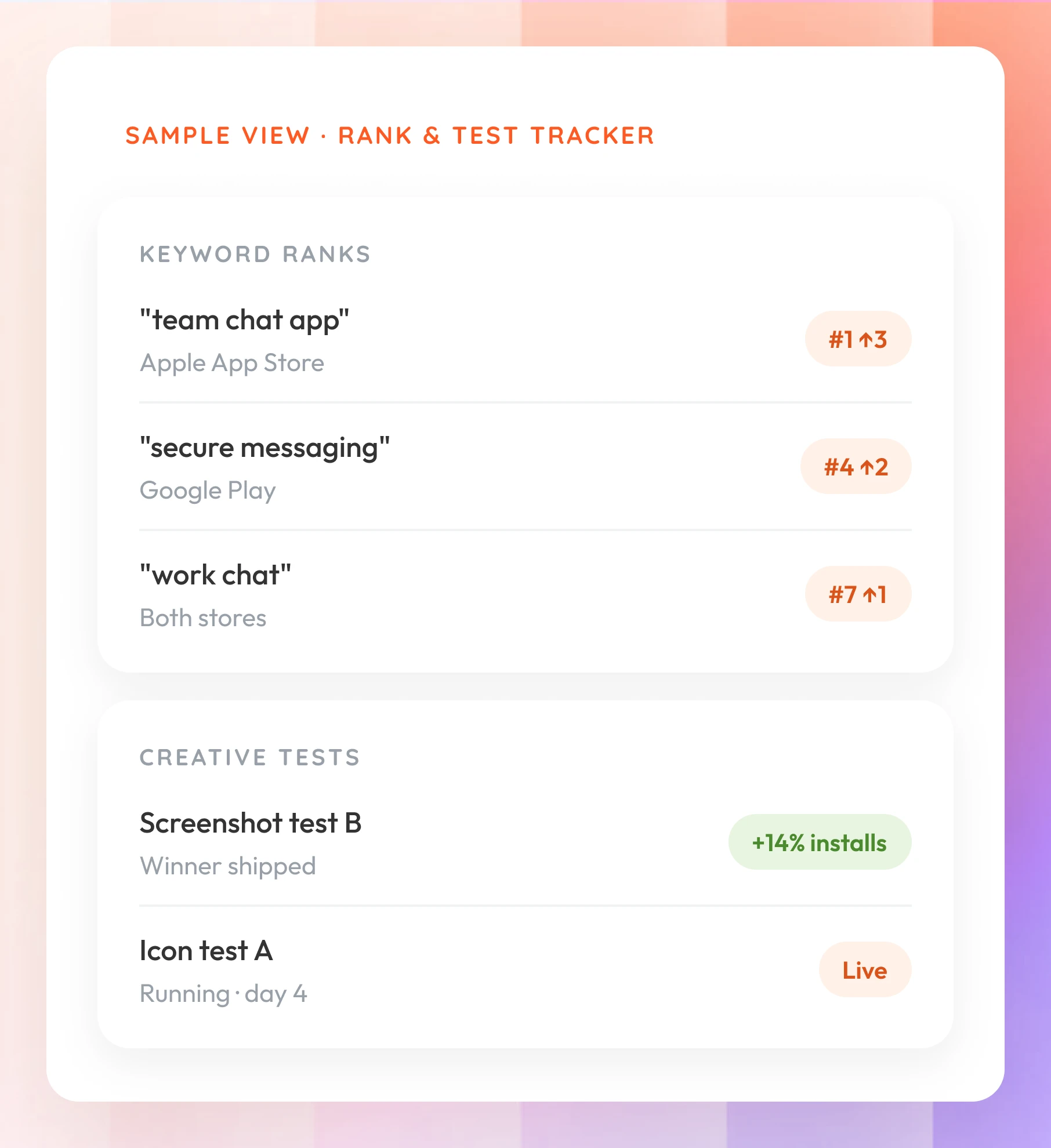
Changes go live with tracking from day one: keyword movement, impressions, page views, conversion rate, & rating velocity.
Winning tests roll into the listing, losing ones get retired, and the system extends to new locales and seasonal windows.
Every keyword, screenshot, and A/B test is judged on installs and conversion rate, not impressions that never become real users or downloads.
Store-listing and product-page experiments run continuously, one variable at a time, then measure, roll in, and repeat every release cycle.
A fintech app and a casual game never rank the same way, so keyword strategy, creative direction, and testing cadence are built per category.
Competitor keyword moves, creative refreshes, and rating swings are tracked as they happen, so openings get used instead of noticed too late.
Results from Tru Performance mobile and lifecycle growth engagements.
Metadata changes on Google Play can move rankings within days of indexing; the Apple App Store applies updates with each release. Meaningful movement in keyword rankings and conversion rate typically shows within 4 to 8 weeks, and gains compound through sustained testing cycles after that.
Yes, as two distinct channels. Apple work centers on the keyword field, subtitle, and in-app events; Google Play work centers on description indexing, store listing experiments, and engagement signals. Shared assets get adapted per store, never copied across.
Read access to App Store Connect and Google Play Console for performance data, plus your analytics or attribution tool if you run one. Listing changes go through your team's approval, and we work entirely inside your existing release process.
ASO earns organic installs from store search and browse; paid campaigns buy placement. Paid stops the moment budget stops. ASO keeps converting, and a stronger listing raises the conversion rate of every paid click you send to it.
Yes. Paid traffic lands on the same product page, so better screenshots, copy, and ratings lift paid conversion too, which lowers your effective cost per install. Keyword research also feeds your search ads, since store queries reveal exactly how users describe your category.
Google Play tests run through store listing experiments; Apple tests run through Product Page Optimization. Every test isolates one variable, such as the icon or first screenshot, runs to significance, and ships only when the winner is clear. Results feed the next round.
Yes. Localization covers keywords, metadata, and creative per market, not translation alone, because search behavior differs by language and store region. We prioritize markets using your install data and category demand before localizing anything.
Continuously, on a cadence: keyword and ranking review monthly, creative tests in rolling cycles, and a metadata refresh whenever the data or a seasonal window justifies one. A set-and-forget listing decays as competitors keep testing against it.
Send us your store links. We will audit your keywords, metadata, and creative against your category leaders and show you the gaps worth closing first. You see the findings before you commit to anything.


